
Solar Deep Well Pump

Mudisen solar-powered deep well submersible pumps are designed for efficient groundwater extraction in remote areas and environments with no or unstable power grids. Traditional submersible pumps often face problems such as unstable power supply and high energy consumption. This series of pumps utilizes solar energy combined with advanced DC brushless permanent magnet technology and intelligent MPPT algorithms to provide a sustainable water supply with zero carbon emissions and zero fuel costs, maintaining excellent performance in applications such as agricultural irrigation, livestock drinking water, and domestic water supply in remote areas.

Solar direct drive + energy storage compatible | IP68 protection rating | Stainless steel/cast iron optional
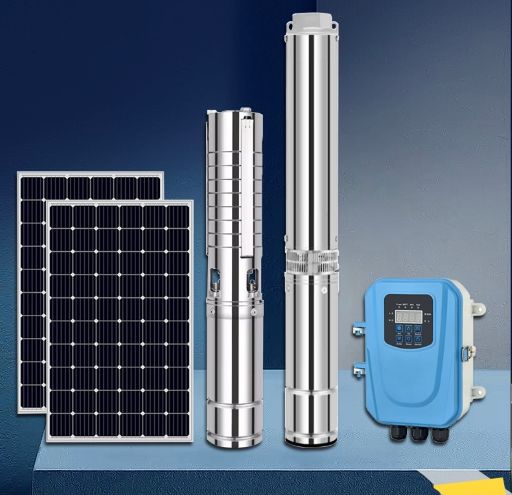
Solar-powered deep-well pumps are suitable for deep-well water extraction, agricultural irrigation, and domestic water supply in areas with no electricity or a shortage of electricity.

Advantages of this pump

Zero electricity cost

Using solar power, there is no need to pay for electricity or diesel.

Simple maintenance

Low daily maintenance costs, no need for frequent refueling or replacement of generator parts

Long lifespan

It adopts a brushless DC motor, a fully submersible water-cooled design, high-strength stainless steel construction, and is equipped with multiple intelligent protections such as MPPT (Maximum Power Point Tracking) to reduce the failure rate and extend service life.

Flexible and compatible

Adopting a DC/AC/DC compatible design, it supports direct drive of solar panels + energy storage batteries, as well as solar arrays of different sizes and hybrid power configurations, which can flexibly adapt to various application scenarios and power requirements.

Multiple material configurations

It offers a variety of material options, including stainless steel and copper wire motors, to adapt to different water qualities and corrosion and abrasion conditions.

Environmentally friendly

Zero emissions, no pollution, no noise, utilizing clean and renewable solar energy

Technical Specifications

Performance Specifications

 
  •  Flow rate range: 1 – 50 cubic meters/hour
  •  Maximum head: Up to 300 meters
  •  Daily output: Up to 100 – 500 cubic meters (depending on sunlight and system configuration)
  •  Drive method: Solar direct drive (DC) / AC/DC compatible
  •  Controller type: MPPT intelligent controller

Physical Specifications

 
  • Outlet size: 1 – 3 inches
  • Applicable well diameter: 100 – 200 mm (4 – 8 inches)
  • Installation method: Vertical submersible installation
  • Controller: MPPT Intelligent Controller
  • Motor: Permanent Magnet Synchronous Motor


Material Construction

 
  • Motor housing: 304/316 stainless steel
  • Impeller/guide housing: Stainless steel or high-strength engineering plastic
  • Shaft: Stainless steel or high-chromium steel
  • Mechanical seal: Ceramic/graphite + double sealing structure
  • Cable: Waterproof and corrosion-resistant submersible cable
  • Overall material: Corrosion-resistant, high-strength configuration, adaptable to different water quality environments

Comparison of Solar Deep Well Pump Models

太阳能深井潜水泵型号对比
太阳能深井潜水泵型号对比表
Solar Deep Well Submersible Pump Model Comparison
型号
Model
功率
Power (kW)
最大扬程
Max Head (m)
最大流量
Max Flow (m³/h)
适用井径
Well Diameter (mm)
日出水量
Daily Output (m³)
电压
Voltage
控制器
SP-300 0.3 30 1.5 ≥100 (4") 20-50 48V DC MPPT
SP-750 0.75 80 3.5 ≥100 (4") 50-120 72V DC MPPT
SP-1500 1.5 120 8 ≥125 (5") 100-250 110V MPPT
SP-2200 2.2 180 12 ≥150 (6") 150-350 220V MPPT
SP-3700 3.7 250 25 ≥150 (6") 200-450 220V MPPT
SP-5500 5.5 300 40 ≥200 (8") 300-600 380V MPPT

Case Study

The Problem

The client’s Wogan mandarin orchard is located in a remote mountainous area lacking a stable power grid, making irrigation water a major challenge. The high cost and low efficiency of manual water transport have severely hampered the growth of the 80-mu orchard.

The Solution


A 34.8 kW photovoltaic water-pumping system was installed. The configuration consists of sixty 580 W photovoltaic panels powering an 18.5 kW deep-well submersible pump. The system extracts water directly from a well 280 meters deep, delivers it to an elevated storage tank, and subsequently irrigates the orchard via gravity-fed flow.

The Result

The system operates reliably for about 10 hours a day with a flow rate of 15 cubic meters per hour, pumping approximately 100 cubic meters of water daily and effectively solving irrigation challenges. Furthermore, being powered by photovoltaics, it incurs virtually no electricity costs and is environmentally friendly.

Frequently Asked Questions

How can I prevent the water pump from stopping during prolonged periods of overcast, rainy weather or at night when there is no sunlight?

There are generally three approaches: Option 1 involves installing battery storage to capture surplus energy on sunny days for use during overcast periods and at night. Option 2 entails adding a complementary grid connection or diesel generator system; solar power is prioritized, with an automatic switch to the backup power source when supply is insufficient, ensuring a continuous 24-hour water supply. Option 3 focuses on expanding the photovoltaic array to enhance power generation in low-light conditions, combined with a large-capacity reservoir to store enough water during the day for the following day's needs, utilizing gravity-fed irrigation.

What causes the water pump's output to decrease or even become intermittent?

You can make a quick preliminary assessment by observing the operating current: if the current is low, the impeller may be worn, or the check valve in the pump head might be obstructed by debris; if the current is normal, the issue is likely a ruptured pipe or a leaking gasket. If the current is high, it generally indicates severe wear on components such as bearings or the impeller, necessitating replacement. Additionally, check the bladder at the rear of the motor; if it has shifted from its normal concave shape to bulging outward, this usually signifies a pressure buildup caused by internal overheating, implying the motor may have burned out.

What could be the reasons for a water pump failing to discharge any water at all?

Insufficient voltage or excessive cable voltage drop; wires that are too thin or too long; blocked pipes or clogged filter screen; ruptured pipes or damaged gaskets; suction port exposed above water level (dynamic water level drops beyond the pump's position); submersible pump rotating in reverse (three-phase power connection reversed); severely worn impeller and sealing rings; bent pump shaft or misaligned bearings.

How do you estimate the required head and flow rate?

Total Head = Net Head (vertical height from the water surface to the outlet) + Pipeline Friction Loss (generally estimated at 10% of the pipe length) + 5-meter safety margin. Flow Rate = Total Daily Water Consumption ÷ Estimated Daily Operating Hours.

How do you match solar panels with a pump?

Core principle: Solar panel power = Water pump power × 1.5–2 (to provide a safety margin for overcast days and low-light conditions).

Get In Touch
Find Us
Chat Us

Send us a message

More than sourcing,we build friendships!