
Insights into the Underground Tailings Backfilling Industry

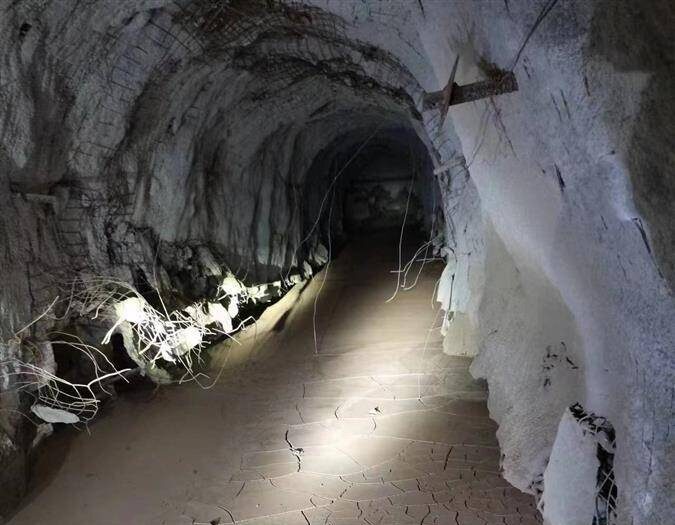
Tailings are fine-grained waste materials remaining after ore has undergone crushing, grinding, and beneficiation. Current methods for tailings utilization include the recovery of valuable metals, the production of construction and novel materials, the manufacture of soil conditioners, and underground backfilling. Underground tailings backfilling involves returning tailings to mined-out areas to address storage issues while providing structural support for mining operations. Mainstream backfilling techniques include cemented backfilling, non-cemented backfilling, and dry backfilling. However, the fluid transport of tailings backfill currently faces challenges such as a high risk of clogging, short pump service life, and high maintenance costs.

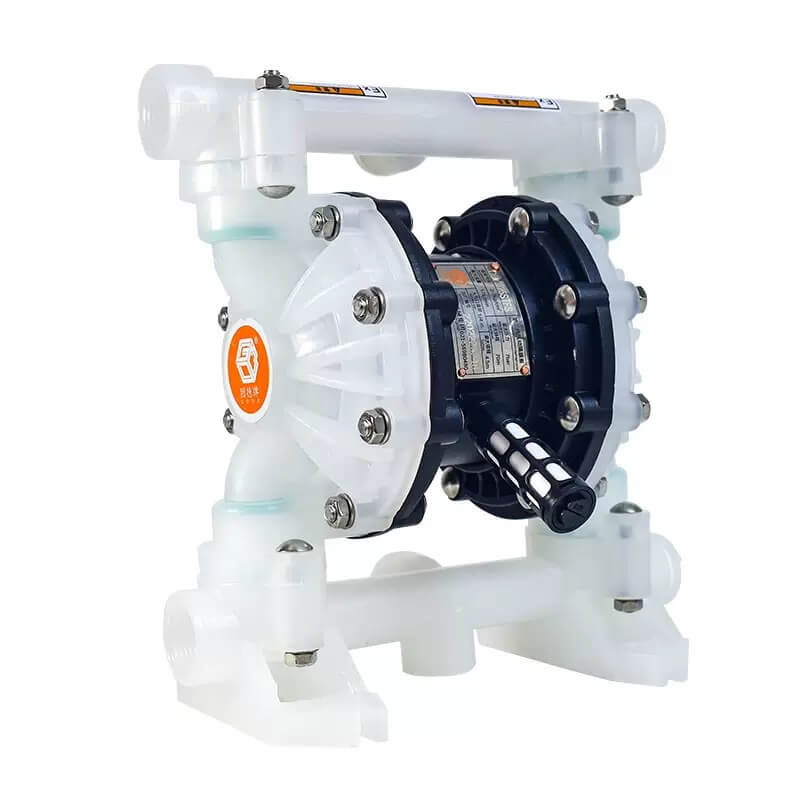
Explosion-proof pneumatic double diaphragm pump with safe dry-running capability for hazardous environments

What are the core characteristics of underground tailings backfilling?

The slurry has a high solids content.

Typically, tailings slurry contains 60% to 80% solids and is prone to settling and caking.

Highly abrasive slurry

The main component of the tailings is silicon dioxide, which has extremely high hardness.

Inconsistent incoming slurry quality

The surface mixing bin frequently experiences brief interruptions in material feed, resulting in an unstable supply.

Harsh operating conditions

The underground environment is damp and cramped, making equipment maintenance difficult; if a breakdown halts operations at the mining face, the resulting losses are immense.

Process requirements

A stable flow rate is required, without significant fluctuations; otherwise, the hardening strength of the backfill material will be affected.
What are the pain points associated with the fluid transport of underground mine tailings backfill?

Short lifespan

The tailings sand within the slurry is highly abrasive; during transport, it continuously erodes the pump’s flow-path components—such as the impeller and casing—as well as the inner walls of the pipeline, leading to rapid equipment wear. This reduces operational efficiency, shortens service life, and increases the frequency and cost of pump replacement and maintenance.

High pump maintenance costs

Issues with pump wear and clogging necessitate frequent shutdowns for inspections, the replacement of worn parts, and pipeline cleaning; this not only entails high maintenance costs but also severely impacts operational efficiency.

Prone to clogging

If the flow velocity of the tailings slurry is too low, the material tends to settle at the bottom of the pipeline, causing sedimentation and blockages; conversely, excessively high flow velocity accelerates pump wear.

Solutions for Underground Tailings Backfill Slurry Transport

The transport of tailings backfill slurry is a complex system engineering task; solutions must be tailored to specific operating conditions, such as transport distance, pumping head, slurry concentration, and particle hardness. The key lies in selecting the appropriate pump type, optimizing the pipeline system, and utilizing wear-resistant materials.

Pump Selection


Selecting a pump for tailings backfill transport is a complex, systematic task that requires evaluating factors such as slurry characteristics, transport distance and lift height, flow rate requirements, temperature, and gas content. The following recommendations cover common scenarios; however, specific pump selection should be determined through an assessment by a professional engineer.

Underground explosive environments:Underground spaces are often cramped and humid, potentially containing flammable or explosive gases (such as methane), with backfill lift heights ranging from tens to hundreds of meters. Pneumatic diaphragm pumps are recommended. They offer advantages such as explosion-proof capabilities, strong self-priming ability, and the capacity to handle complex fluids.

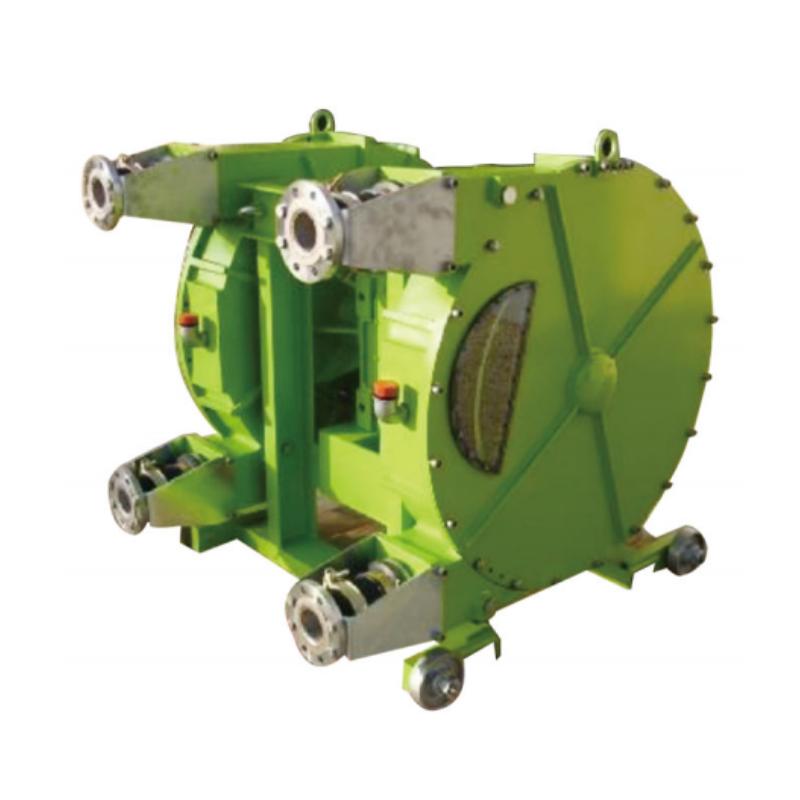
High-concentration paste backfill (>65%): Standard centrifugal pumps are generally unsuitable when slurry concentration reaches 65%–85%. Hose pumps are recommended; because they operate via a squeezing action, they are highly adaptable to high-viscosity, high-concentration slurries—capable of transporting material with up to 80% solids content—and offer a self-priming lift of up to 9 meters. Additionally, the hose is the only wear part, making replacement simple and cost-effective. However, paste backfill involves high pipeline resistance, with operating pressures typically ranging from 0.6 to 1.2 MPa; therefore, adequate pressure margins must be factored into the selection to prevent accelerated hose fatigue.

Short-distance, low-lift scenarios: For applications involving short transport distances and low lift requirements, centrifugal pumps or hose pumps—both of which feature simple designs and easy maintenance—are suitable options. Centrifugal pumps are ideal for handling clear water or mildly abrasive fluids at high flow rates and low lift heights. Hose pumps excel in tailings backfill applications due to their seal-less design and ability to transport high-viscosity media containing large particles.

Long-distance, high-lift scenarios:Large mineral processing plants where the tailings storage facility is located far from the processing site require pumps capable of high lift and superior abrasion resistance. High-head slurry pumps (such as the HH type) may be used; a single pump can meet head requirements of 150–200 meters, thereby reducing the complexity associated with connecting multiple pumps in series. Alternatively, slurry pumps connected in series (such as the horizontal ZJ type) can be employed to achieve a cumulative head, though this requires precise calculation of the total head and pressure.

Selection of Wear-Resistant Materials


Tailings slurry is typically highly abrasive; therefore, pump flow-path components—such as the impeller and pump casing—require highly wear-resistant materials, such as high-chromium alloys. Under extreme operating conditions, composite materials—such as a high-chromium alloy combined with a silicon carbide coating—may be employed to further extend service life.

Piping System Optimization


First, tailings slurry causes severe wear on pipelines; traditional metal pipes are prone to corrosion and have a short service life, whereas wear-resistant plastic pipes—such as those made of high-molecular-weight polyethylene—offer impact and corrosion resistance, significantly reducing maintenance costs. Second, regarding pipeline design, the number of elbows and diameter transitions should be minimized to reduce fluid resistance and wear. At the same time, the pipeline’s inclination angle and flow velocity must be carefully designed to prevent slurry sedimentation and blockages. Specific pipeline design plans should be tailored to actual site conditions.

Maintenance and Other Key Points


When using a centrifugal pump, the pump casing must be filled with liquid before startup to prevent “air binding,” which would otherwise hinder liquid suction. Additionally, cavitation can damage the pump casing and reduce efficiency; therefore, the design must ensure that the pump’s installation location and suction piping provide sufficient Net Positive Suction Head (NPSH)—specifically, the available NPSH must exceed the required NPSH. Furthermore, pump seals, bearings, and wear parts require regular inspection, with aging components replaced promptly. During operation, monitor for unusual noises or vibrations, and shut down the pump immediately for inspection if any abnormalities are detected to prevent further damage.

Comparison of Tailings Backfill Slurry Pumps

Heavy-duty hose pump

Advantages include the ability to pump slurries with 80% solids content, capability for prolonged dry running, strong self-priming ability, positive displacement operation, and ease of maintenance. In harsh operating conditions—such as high-concentration cemented backfilling, slurries containing crushed rock, unstable feed, poor underground maintenance conditions, and requirements for continuous, stable supply—heavy-duty hose pumps offer superior advantages regarding overall failure rates, downtime-related losses, and lifecycle costs.

Pneumatic Diaphragm Pump

Advantages include explosion-proof capabilities,complex fluid handling capabilities , and ease of installation. Disadvantages include: a generally low maximum pressure (≤0.8 MPa), which is insufficient for long-distance underground backfilling; high energy consumption during continuous high-flow operations; and the presence of pulsation.

Centrifugal slurry pump

The advantages are low procurement costs and high flow capacity. The disadvantages are: first, high maintenance costs—under high-concentration slurry conditions, the impeller suffers severe friction and rapid wear, with the service life of wear parts typically ranging from 2 to 6 months; second, they cannot run dry; third, flow rate and head are significantly affected by slurry concentration; and fourth, the shaft seal is prone to sand ingress, leading to water and slurry leakage and posing significant safety risks. Overall, slurry pumps are suitable for dilute slurries but not for high-concentration cemented backfill applications.

Single-screw pump

Its advantages include steady flow and self-priming capability. However, a drawback is that coarse particles in the mortar can easily become lodged in the gap between the rotor and the rubber stator, shortening the service life or even causing total pump failure and shutdown. Screw pumps are suitable for conveying slurries containing fine sand and no large aggregates, but they are not suitable for conveying tailings slurries.

Plunger filling pump

The advantages are high pressure—reaching over 10 MPa—making it suitable for ultra-long-distance transport. The disadvantages are high cost, complex structure, and large size.

Mudisen pumps made in China

水处理厂污水输送系统中使用的气动隔膜泵
Pneumatic diaphragm
Heavy-duty hose pump
Mudisen’s China-manufactured heavy-duty hose pumps are designed to transport extremely abrasive fluids with solids content of up to 80%, featuring zero leakage, resistance to abrasion and clogging, powerful self-priming capabilities, and minimal maintenance requirements.

Frequently Asked Questions

Why do liquid leakage issues occur?

Generally speaking, leakage can result from seal failure, corrosion-induced perforation of the pump casing or piping, or improper installation and operation. Mechanical seals or gland packing in conventional pumps are prone to aging and wear when handling highly corrosive, high-temperature, or particle-laden media, leading to leaks. Leakage may also occur due to material-process incompatibility or the selection of unsuitable materials, resulting in pump casing corrosion. Additionally, loose piping connections or inadequate temperature control can cause leakage issues. Therefore, please consult our professional engineers for an assessment Guideduring the pump selection stage.

What causes a sudden increase in vibration or noise while the pump is running?

A sudden increase in vibration during pump operation often signals one of the following issues: Bearing wear: After prolonged operation, bearing clearances increase, leading to a noticeable rise in vibration and noise. Impeller imbalance: Impurities or scale deposits in the pumped plating solution cause corrosion, wear, or uneven buildup on the impeller, resulting in imbalance during rotation. Excessive submerged length: For submersible pumps, an excessively long submerged section reduces shaft rigidity, intensifying oscillation and vibration during operation. Changes in operating conditions: Variations in the plating solution's concentration, temperature, or particle content alter the forces acting on the impeller, leading to increased vibration.

For fluid transfer applications in the electroplating industry, which should you choose: a magnetic drive pump or an air-operated double-diaphragm pump?

First, the core advantage of a magnetic drive pump is the absence of mechanical seals, which structurally eliminates the risk of leakage. However, due to the very narrow clearance between the impeller and the containment shell, these pumps cannot handle fluids containing particles or fibers, nor can they run dry. In contrast, diaphragm pumps offer strong self-priming capabilities and can handle complex fluids—including high-viscosity media containing particles or impurities—though their sealing performance is generally inferior to that of magnetic drive pumps, and their output involves pulsation, resulting in less steady flow. Therefore, magnetic drive pumps are generally more suitable for clean media requiring strict sealing, whereas diaphragm pumps are better suited for media containing particles or impurities. Pump selection is a complex, systematic process; please consult a professional engineer to evaluate your specific requirements before making a choice (Link).

How do magnetic drive pumps prevent dry running?

Protection measures can be considered from three aspects: First, install automatic protection devices—specifically, a flow switch or liquid level sensor on the inlet pipe and a pressure switch at the outlet. The system should automatically cut off power and shut down the pump if the inlet flow is insufficient, the liquid level in the tank is too low, or the outlet pressure rises abnormally. Second, cultivate proper operating habits—prime the pump before startup, and when shutting down, close the outlet valve before cutting off the power to prevent backflow of the medium; after a power outage, check the liquid level and the condition of the pump chamber before restarting. Third, implement temperature monitoring—install a platinum resistance temperature sensor on the outer surface of the isolation shell to monitor the temperature in the annular gap in real time, triggering an alarm or automatic shutdown if the temperature rises abnormally.

How can pumps in electroplating workshops be protected against corrosion and have their service life extended?

Protection should be approached from two dimensions: material selection and maintenance. Regarding material selection, the materials of the pump's wetted parts must be compatible with the medium being handled. For instance, fluoroplastic-lined components are typically used for strong-acid or strong-alkali electroplating solutions, whereas highly oxidizing media—such as waste liquids containing chromic acid—require pumps made entirely of PTFE or featuring a fluoroplastic-lined casing combined with a PTFE diaphragm. Additionally, applying an anti-corrosive epoxy coating or a galvanized finish to the pump casing helps mitigate corrosion of the metal housing caused by acid mist. Maintenance measures include: regularly rinsing off chemical residues from the pump's exterior, particularly at sealing surfaces and connection points; periodically replacing wear-prone sealing components such as O-rings and diaphragms; and performing routine tasks such as bearing lubrication, motor insulation checks, and inspections of the pump base and anchor bolts for any signs of loosening.

Get In Touch
Find Us
Follow Us

Send us a message

More than sourcing,we build friendships!