
Table of Contents
What is a magnetic drive pump?
A magnetic drive pump is a type of centrifugal pump that utilizes a magnetic coupling to transmit power via magnetic attraction. The operating sequence is generally as follows: the motor rotates, causing the external magnet to rotate; magnetic force drives the internal magnet, which in turn rotates the impeller to transport the liquid. In contrast, the operation of a conventional pump typically involves the motor shaft extending into the pump casing to drive the impeller and transport the liquid. Conventional pumps require a seal where the shaft penetrates the casing—a point prone to seal degradation and fluid leakage—whereas magnetic drive pumps completely isolate the motor from the pump’s interior; the absence of a mechanical seal ensures a completely leak-free operation. These pumps are primarily used for handling toxic, flammable, explosive, highly corrosive, or valuable liquids.
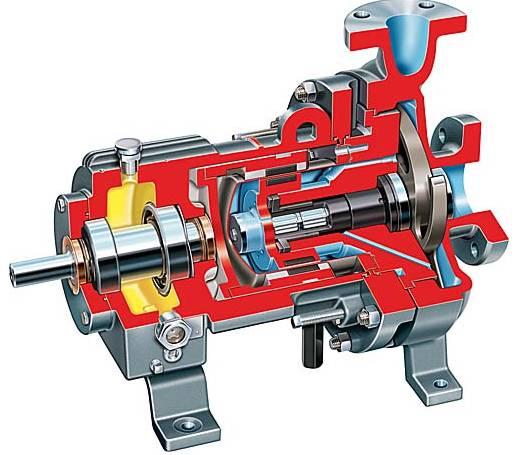
Classification of Magnetic Drive Pumps
| Classification Basis | Pump Name | Introduction | Advantages | Disadvantages | Common Application Fields |
|---|---|---|---|---|---|
| By Working Principle | Centrifugal Magnetic Drive Pump | Working principle: the motor drives the outer magnet rotor to rotate → the magnetic field passes through the containment shell → it drives the inner magnet rotor and impeller to rotate synchronously → the impeller rotates at high speed, generating centrifugal force that draws liquid in through the inlet and discharges it under pressure through the outlet. |
|
|
|
| Magnetic Gear Pump | Working principle: the motor drives the outer magnet rotor to rotate → the magnetic field passes through the containment shell → it drives the inner magnet rotor and gear shaft to rotate synchronously → a pair of meshing gears rotates inside the pump chamber; a partial vacuum forms on the side where the teeth disengage, drawing liquid in; as the gears continue to rotate, the liquid is squeezed along the inner wall of the pump body and discharged through the outlet. |
|
|
| |
| Magnetic Vortex (Regenerative) Pump | Working principle: the motor drives the outer magnet rotor to rotate → the magnetic field passes through the containment shell → it drives the inner magnet rotor and vortex-type impeller to rotate synchronously. |
|
|
| |
| Magnetic Screw Pump | Working principle: the motor drives the outer magnet rotor to rotate → the magnetic field passes through the containment shell → it drives the inner magnet rotor and screw to rotate synchronously. The screw performs planetary motion inside the pump body, forming multiple continuous sealed chambers between the screw and the pump body. As the screw rotates, these sealed chambers move uniformly from the suction end toward the discharge end, and the liquid is conveyed steadily forward as if ‘screw-propelled.’ Because of the uniform axial propulsion, the flow is pulsation-free and pressure builds slowly and steadily. |
|
|
| |
| By Liquid Properties | Corrosion-Resistant Chemical Magnetic Pump | The corrosion-resistant chemical magnetic pump works the same way as an ordinary magnetic pump. The key to corrosion resistance lies in the material selection of the wetted parts, ranked from low to high corrosion resistance: Reinforced polypropylene (RPP/FRPP): for mildly corrosive conditions; low cost, suitable for low-concentration acids and alkalis. Stainless steel (304/316L): general-purpose corrosion resistance, suitable for weakly corrosive media (e.g., dilute acids/alkalis, salt solutions); high mechanical strength, widely used in the pharmaceutical and food industries. Fluoroplastics (F46/FEP, PTFE, PFA, PVDF): the ceiling of corrosion resistance. They are stable against strong acids of any concentration (sulfuric, hydrochloric, nitric, hydrofluoric), strong alkalis and organic solvents — currently the material of choice for highly corrosive service. The common practice is a metal casing to provide mechanical strength and a fluoroplastic inner lining to resist corrosion; the combination balances durability and pressure resistance. |
|
|
|
| High-Temperature Magnetic Pump | The high-temperature magnetic pump shares the same basic principle as an ordinary magnetic pump, but adds several key designs for high-temperature service: High-temperature magnets: ordinary NdFeB magnets demagnetize easily at high temperature; high-temperature pumps use samarium-cobalt magnets (SmCo), which withstand up to 300–350 °C, have high coercivity and minimal magnetic decay at high temperature. Cooling system: a water-cooling device is added between the motor and the magnetic coupling to prevent heat from the high-temperature medium from being conducted to the motor, keeping the motor running normally. High-temperature containment shell: made of Hastelloy, titanium alloy, etc., retaining strength and corrosion resistance at high temperature. Temperature monitoring: a platinum resistance temperature sensor can be installed on the outer surface of the containment shell to monitor temperature rise in real time, with alarm or automatic shutdown on over-limit. Currently mainstream high-temperature magnetic pumps operate stably from -20 °C to 350 °C, with special designs reaching 450 °C. |
|
|
| |
| By Material | Plastic Magnetic Pump | The core of the plastic magnetic pump is that the wetted parts — pump body, impeller and the inner wall of the containment shell — use plastic instead of metal. There are two categories by material: Engineering-plastic magnetic pump: the pump body and impeller are injection-molded from engineering plastics such as reinforced polypropylene (FRPP), with a stainless steel casing to strengthen the structure. Corrosion resistance is moderate. Fluoroplastic magnetic pump: all wetted parts use fluoroplastics (FEP, PFA, PVDF, etc.), with corrosion resistance near the ‘ceiling.’ In fluoroplastic-lined pumps the lining is integrally molded; the metal casing only provides external support, and the medium contacts plastic exclusively. The temperature range is about -30 °C to 190 °C, normally lower than for metal pumps. |
|
|
|
| Stainless Steel Magnetic Pump | The stainless steel magnetic pump uses 304, 316 or 316L stainless steel for the wetted parts. Depending on the grade, corrosion resistance falls into three tiers: 304 stainless steel: general-purpose, suitable for neutral media and mildly corrosive service, such as clean water, dilute organic acids and ordinary salt solutions; very cost-effective. 316 stainless steel: higher molybdenum content, stronger resistance to chloride-induced pitting and crevice corrosion; often used for seawater, brine and chloride-containing wastewater, and suitable for weak organic acids such as acetic, citric and lactic acid. In addition, 316/316L has a high surface finish that resists adhesion and is easy to clean and sterilize, so it is widely used in pharmaceutical GMP workshops and food processing plants. 316L stainless steel: lower carbon content than 316, stronger resistance to intergranular corrosion, and no corrosion weak points form at welds after welding. For welded components or elevated-temperature service, 316L is more suitable than 316. |
|
|
| |
| Alloy Magnetic Pump | The alloy magnetic pump is designed for extreme corrosion and high-temperature service. Its wetted parts — pump body, impeller and containment shell — use special alloy materials that operate more reliably under harsher conditions than ordinary stainless steel and fluoroplastics. Common alloy types fall into three categories: Titanium alloy: low density, high strength and outstanding corrosion resistance; suitable for chloride-ion and oxidizing media such as wet chlorine, seawater and hypochlorite, but must not be used for hydrofluoric acid or strongly reducing acids. Hastelloy: C276 is the most common grade, resistant to all acids except hydrofluoric acid, resistant to chloride ions and high temperature. The B series is specifically resistant to reducing acids such as hydrochloric and sulfuric acid. Duplex stainless steel (2205/2507): a ferrite + austenite duplex structure with twice the strength of ordinary stainless steel, stronger resistance to chloride pitting than 316L, and lower cost than Hastelloy. |
|
|
|
Comparison of Magnetic Drive Pump Types
1. Comparison of Four Magnetic Drive Pump Types
| Dimension | Centrifugal Magnetic Pump | Magnetic Gear Pump | Magnetic Vortex Pump | Magnetic Screw Pump |
|---|---|---|---|---|
| Category | Vane (rotodynamic) type | Positive displacement | Vane (rotodynamic) type | Positive displacement |
| Core structure | Impeller + volute | A pair of meshing gears | Special vortex impeller | Single / multiple screws |
| Working principle | Centrifugal force flings liquid outward | Gears squeeze and push liquid | Longitudinal vortex acceleration | Axial propulsion in sealed chambers |
| Viscosity range | < 50 cP | 50–5,000 cP | < 50 cP | 50–1,000,000 cP |
| Flow characteristics | Large flow, varies with pressure | Small flow, fixed displacement | Small flow, low fluctuation | Large flow, extremely stable and pulsation-free |
| Head capability | Medium (single stage ≤ 125 m) | Medium-to-high pressure | High head | Medium-to-high pressure; higher with multiple stages |
| Self-priming capability | Weak — requires priming | Strong | Medium | Very strong (up to 8 m) |
| Metering accuracy | Low | High — fixed displacement per revolution | Relatively low | High — pulsation-free |
| Solids tolerance | Prohibited | Small amounts of soft particles acceptable | Prohibited | Tolerable |
| Efficiency | High (highest of the four) | Medium | Low — about 20% below a comparable centrifugal pump | Medium-to-high |
| Structural complexity | Simplest | Relatively simple | Simple | Most complex |
| Cost | Lowest | Medium | Medium-to-low | Highest |
| Dry running prohibited | Yes | Can run dry briefly | Yes | Can run dry briefly |
| Main advantages | Simple structure, large flow, high efficiency, low cost | Accurate metering, compact, handles medium viscosity | High head at small flow, simple flow-passage design | Pulsation-free flow, very strong self-priming, very wide viscosity range, solids-tolerant |
| Main disadvantages | Avoids high viscosity and solids; low flow can overheat and demagnetize | Pulsating noise, avoids hard solids, high internal leakage at high pressure | Low overall efficiency, limited flow, also avoids solids | Complex structure and high cost; uneconomical for large-flow, low-pressure duty |
2. Material Comparison
| Material Type | Corrosion Resistance Range | Max. Temperature | Typical Applications |
|---|---|---|---|
| 304 Stainless Steel | Mildly corrosive media | ~200 °C | Clean water, weak acids/alkalis, organic acids |
| 316L Stainless Steel | Moderate corrosion | ~200 °C | Chloride-containing media, pharmaceutical, food |
| Hastelloy alloy | Strong corrosion | ~350 °C | Concentrated hydrochloric acid, concentrated sulfuric acid, chlor-alkali |
| Fluoropolymer-lined (F46/PFA) | Almost all acids and alkalis | ≤ 120 °C | Chemical synthesis, strong-acid transfer |
| Engineering plastics (PP/FRPP) | Moderate corrosion | ≤ 80 °C | Low-concentration acids/alkalis, environmental wastewater |
3. Plastic vs. Stainless Steel vs. Alloy Magnetic Pumps
| Dimension | Plastic Magnetic Pump (Fluoropolymer-lined) | Stainless Steel Magnetic Pump | Alloy Magnetic Pump |
|---|---|---|---|
| Common materials | PP / FRPP / PVDF / FEP / PFA (mainly fluoropolymer-lined) | 304 / 316 / 316L stainless steel | Titanium alloy / Hastelloy / duplex stainless steel 2205 / 2507 |
| Corrosion resistance grade | Excellent — withstands almost any acid/alkali concentration | Moderate — suitable for weakly to moderately corrosive media | Excellent — covers almost all highly corrosive media |
| Applicable concentration range | Any concentration of sulfuric, hydrochloric and nitric acid; any concentration of hydrofluoric acid; handles almost all organic solvents | Typically: dilute sulfuric acid ≤ 10%, dilute hydrochloric acid ≤ 5%, sodium hydroxide ≤ 50%, acetic acid ≤ 50%, phosphoric acid ≤ 85% | Concentrated sulfuric acid, concentrated hydrochloric acid and aqua regia; excludes hydrofluoric acid (titanium alloy is not resistant to HF) |
| Max. temperature | ≤ 120 °C | -20 °C to 200 °C (higher with samarium-cobalt magnets) | Up to 300–350 °C (with samarium-cobalt magnets) |
| Mechanical strength | Low — pump body brittle, poor impact resistance | High — pressure- and impact-resistant | Highest — about 2× the strength of 316L |
| Hygienic performance | Fair | Excellent — smooth, non-adhesive, easy to sterilize; preferred for food/pharmaceutical | Good |
| Cost | Lowest | Medium | Highest (about 5–10× that of 316) |
| Weight | Lightest | Medium | Heavier |
| Main advantages | Strongest corrosion resistance, lowest price, light weight, wide media range | High strength, hygienic certification, easy maintenance, good value | High-temperature resistance, good mechanical properties, nearly immune to chloride ions |
| Main disadvantages | Low strength and impact-sensitive; low temperature ceiling; service life limited by material | Cannot handle strong acids; corrosion resistance declines at high temperature | High cost, difficult to machine, high repair/replacement cost |
| Typical application media | Concentrated sulfuric acid, concentrated hydrochloric acid, hydrofluoric acid, aqua regia, nitric acid, organic solvents | Dilute acids/alkalis, organic acids, brine, ammonia water, seawater, fruit juice, dairy products | Wet chlorine, concentrated hydrochloric acid, concentrated sulfuric acid, high-temperature organic solvents, chlor-alkali liquor |
How do you select the right magnetic drive pump?
Step 1: Determine if a magnetic drive pump is truly suitable. Magnetic pumps are not a universal solution; rule them out if the operating conditions involve media with significant particulate content or frequent dry-running requirements. Magnetic drive pumps are typically used for transporting flammable, explosive, corrosive, or toxic media.
Step 2: Consider the medium and select the material
For mildly corrosive media, clean water, or organic solvents: 304/316L stainless steel is recommended;
For moderately corrosive media (containing chloride ions): 316L stainless steel is recommended;
For strong acids or alkalis: Fluoroplastic lining (F46/PFA) is recommended;
For concentrated sulfuric acid, concentrated hydrochloric acid, or aqua regia: Hastelloy is recommended;
For hydrofluoric acid: Fluoroplastic lining is recommended;
For high-temperature, highly corrosive media: Hastelloy combined with Samarium-Cobalt (SmCo) magnets is recommended.
Step 3: Consider the temperature and determine the magnet material and cooling method
< 80°C: Standard Neodymium-Iron-Boron (NdFeB) magnets are sufficient;
80–200°C: Use Samarium-Cobalt (SmCo) magnets; consider adding a cooling water jacket depending on actual conditions;
200–350°C: Use Samarium-Cobalt (SmCo) magnets + Hastelloy containment shell + forced cooling system.
Note: Higher temperatures result in greater eddy current losses and more severe heating of the containment shell. Inadequate cooling measures can lead to pump demagnetization and total failure.
Step 4: Determine pump type based on flow rate and head
Typical scenarios include:
High flow + Medium head → Centrifugal magnetic drive pump (mainstay of the chemical industry, accounting for >80%)
Low flow + High head → Magnetic vortex pump (precision applications like semiconductor cooling)
High viscosity + Precise metering → Magnetic gear pump
High viscosity + Solids content + No pulsation requirement → Magnetic screw pump
After selecting the pump type, consult the performance curve for specific models based on the required flow and head; choose a model where the operating point falls within the high-efficiency zone (70%–110% of rated flow).
Step 5: Easily overlooked selection details
- NPSH (Net Positive Suction Head): Suction conditions must meet the pump’s NPSHr requirements; otherwise, cavitation will damage the impeller and containment shell.
- Containment shell material: Metal shells offer high strength and temperature resistance but generate heat due to eddy current losses; non-metallic shells avoid eddy current losses (saving energy) but have lower strength and temperature limits.
- Plain bearing material: Silicon carbide (wear-resistant and high-temperature resistant, a common choice); Graphite (good self-lubrication, suitable for clean media); Zirconia ceramic (for high-purity media applications).
- Protection devices: It is recommended to install liquid level protection to prevent dry running and temperature sensors to monitor for demagnetization risks. Since demagnetization in magnetic pumps is irreversible, the cost of prevention is far lower than the cost of replacing magnets.
Pump selection is a complex, systematic process. The suggestions above outline standard steps for reference; please consult professional engineers for specific selection requirements.
Common faults and solutions for magnetic drive pumps
| Fault Type | Common Cause | Solution | Preventive Measure |
|---|---|---|---|
| Demagnetization | Dry running (running without liquid) | Shut down immediately and replace the demagnetized magnet. | Install a liquid-level sensor plus a dry-run protector. |
| Prolonged low-flow operation | Adjust the operating point to 70%–110% of rated flow. | Verify at selection that the operating point lies in the high-efficiency zone. | |
| Medium temperature exceeds the magnet limit | Replace with a samarium-cobalt magnet and add a cooling water jacket. | For media above 80 °C, a samarium-cobalt magnet is recommended. | |
| Pumping easily-vaporized media | Lower the medium temperature and increase the inlet pressure. | Install a condensing system for easily-vaporized media. | |
| Frictional heat transferred to the magnet | Inspect the inner/outer rotor clearance and eliminate friction points. | Regularly check temperature changes inside the pump body. | |
| Bearing wear | Medium contains trace particles | Clean or replace the bearing; install a filter at the inlet. | Install an inlet strainer to intercept particles. |
| Poor lubrication conditions | Shut down, check the lubricity of the medium, and change material if necessary. | Use silicon carbide (SiC) self-lubricating bearings. | |
| Bent pump shaft / misalignment | Straighten or replace the shaft and re-align. | Regularly check shaft straightness. | |
| Frequent start/stop shock | Optimize operating procedures and reduce frequent starting/stopping. | Install a soft starter to reduce shock. | |
| Pump fails to discharge / insufficient flow | Not primed / insufficient priming | Prime thoroughly and vent until continuous bubble-free flow. | Strictly follow the priming procedure before startup. |
| Suction piping air leakage | Check flange joint seals and plug the leak points. | Regularly check piping tightness. | |
| Suction piping / impeller clogged | Clean the inlet strainer and impeller flow passages. | Regularly clean the inlet filter. | |
| Motor running in reverse | Swap any two phase connections. | Confirm rotation direction on first startup after maintenance. | |
| Suction lift too high | Lower the pump installation height or switch to a self-priming pump. | Verify at selection that NPSHa ≥ NPSHr + safety margin. | |
| Inlet/outlet valves not fully open | Fully open the valves. | Regularly check valve status. | |
| Magnetic coupling demagnetized | Replace the magnet. | Same preventive measures as for demagnetization. | |
| Excessive vibration / abnormal noise | Misalignment | Re-align the pump and motor shaft. | Regularly check alignment. |
| Impeller unbalanced or clogged | Perform an impeller dynamic-balance test and remove foreign matter. | Regularly check impeller integrity. | |
| Severe bearing wear | Replace the bearing. | Regularly monitor bearing clearance. | |
| Cavitation | Raise the liquid level, enlarge the suction pipe diameter, and lower the medium temperature. | Avoid running below the minimum flow. |
Hi, this is a comment.
To get started with moderating, editing, and deleting comments, please visit the Comments screen in the dashboard.
Commenter avatars come from Gravatar.